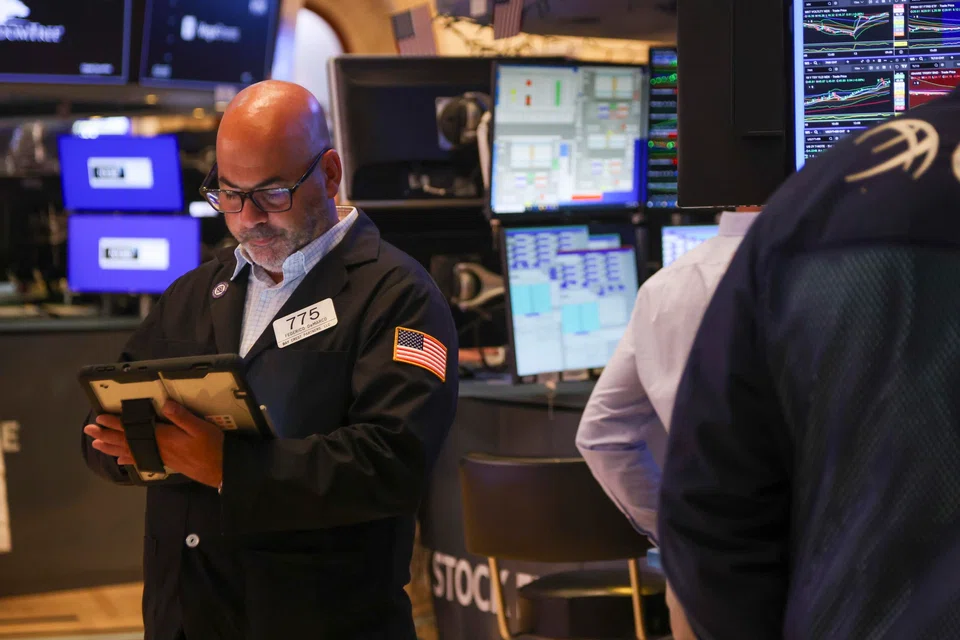
MARKETS rallied through much of the US-Iran conflict. Now, the truce between the United States and Iran is looking less like peace and more like a pause between strikes.
Attacks have resumed. Both sides are testing each other’s limits and the Strait of Hormuz remains the market’s most obvious pressure point.
Yet, despite the geopolitical tension and volatility in energy markets, broader financial markets have not reacted with the kind of sustained panic one might expect.
That is the strange contradiction facing investors today. The conflict rumbles on; the truce is fragile; and the risks are real. But markets appear to be focusing more on inflation, interest rates, the US dollar and the sustainability of the technology rally.
The source of anxiety is changing by the day, but the anxiety itself has not gone away.
The recent SpaceX listing captured this market perfectly. The largest US initial public offering on record arrived amid extraordinary demand, surged on its debut and briefly pushed the company’s valuation above US$2 trillion.
It then gave back much of that early rise as enthusiasm collided with valuation, rising yields and a reassessment of highly priced growth assets.
Conflicting signals
The defining feature of the markets today is not a shortage of signals. Rather, there are too many signals pointing in different directions.
As the on-again off-again conflict rumbles on, the effects of the energy shock are persisting. The latest US data showed headline personal consumption expenditure inflation above 4 per cent, while underlying inflation remained well above the Federal Reserve’s target.
The Fed continues to describe inflation as elevated, keeping the possibility of higher rates alive.
That has supported bond yields and the US dollar. Higher rates reduce the present value placed on future earnings, creating a headwind for richly valued artificial intelligence companies. A stronger dollar also tightens financial conditions for credit.
Yet the AI investment case has not vanished. Demand for computing power, memory, data centres and energy infrastructure remains substantial.
Results from parts of the semiconductor industry show that this is not merely a speculative story.
The difficulty is separating a durable technological shift from the price investors are being asked to pay for it today.
Gold offers another contradiction. It is traditionally regarded as protection against geopolitical risk and inflation. Yet it has weakened during the conflict; rate expectations rose and the dollar strengthened.
Gold produces no income, so higher yields increase the opportunity cost of holding it. A stronger dollar can also make it more expensive for non-US buyers.
So AI can be a compelling long-term theme and vulnerable to higher rates. Gold can be an inflation hedge and still fall when inflation drives yields and the dollar higher. Peace can lower oil prices while markets become more volatile.
None of these outcomes is inconsistent, but together they are psychologically exhausting.
Nobel winning economists Daniel Kahneman and Amos Tversky’s prospect theory helps explain this better.
Prospect theory in action
Investors do not evaluate outcomes in absolute terms. They judge them relative to a reference point: the price at which they bought, the recent peak of a portfolio, the return they expected, or the opportunity they believe they missed.
Gains and losses are also felt asymmetrically. The pain of losing tends to weigh more heavily than the satisfaction of an equivalent gain. This helps explain why rising markets do not necessarily produce calmer investors. The higher a portfolio climbs, the more there is to lose from its new reference point.
A technology investor may feel pleased with gains but increasingly anxious about giving them back. Someone who missed the rally may take greater risk to catch up.
An investor holding gold or long-duration bonds at a loss may resist changing course because selling would turn a paper loss into a realised one.
Prospect theory also suggests that people often become cautious when protecting gains but more willing to gamble when trying to escape losses. In investing, this can produce precisely the wrong behaviour like selling winners too quickly, holding deteriorating positions too long, or chasing a fashionable asset after its strongest rise.
The modern information environment intensifies these tendencies. Investors receive live alerts, dramatic charts, video commentary and confident explanations for every market move. Much of it may be accurate, but accuracy is not the same as usefulness.
The challenge is not to eliminate emotion. It is to prevent emotion from setting the investment horizon.
For investors, that means judging new information against long-term objectives rather than the latest market move. It means distinguishing a change in price from a change in fundamental value, and a compelling narrative from an acceptable valuation.
Diversification, rebalancing and adequate liquidity reduce the need to make one large decision under emotional pressure.
For investment professionals, the responsibility is also changing. Investors are already surrounded by information.
The greater value lies in helping them establish context, recognise behavioural biases and maintain a process when markets send conflicting messages.
The lesson is not that markets have become impossible to understand. It is that permanent uncertainty, amplified by permanent commentary, makes disciplined decision making more important.
Markets will continue to offer reasons for optimism and anxiety at the same time. The task is not to wait until the signals become perfectly clear. They rarely do. It is to build an investment process strong enough to function when they are not.
The writer, CFA, CAIA, is a member of CFA Society Singapore advocacy committee